
01 / ON THE ROAD
RV & camper auxiliary power
Plan energy for lighting, appliances and everyday use while travelling. Review charging equipment and peak loads for your installation.

HC SERIES · LiFePO4
Lead-acid replacement batteries for RV auxiliary power, compact solar storage and backup-power projects.
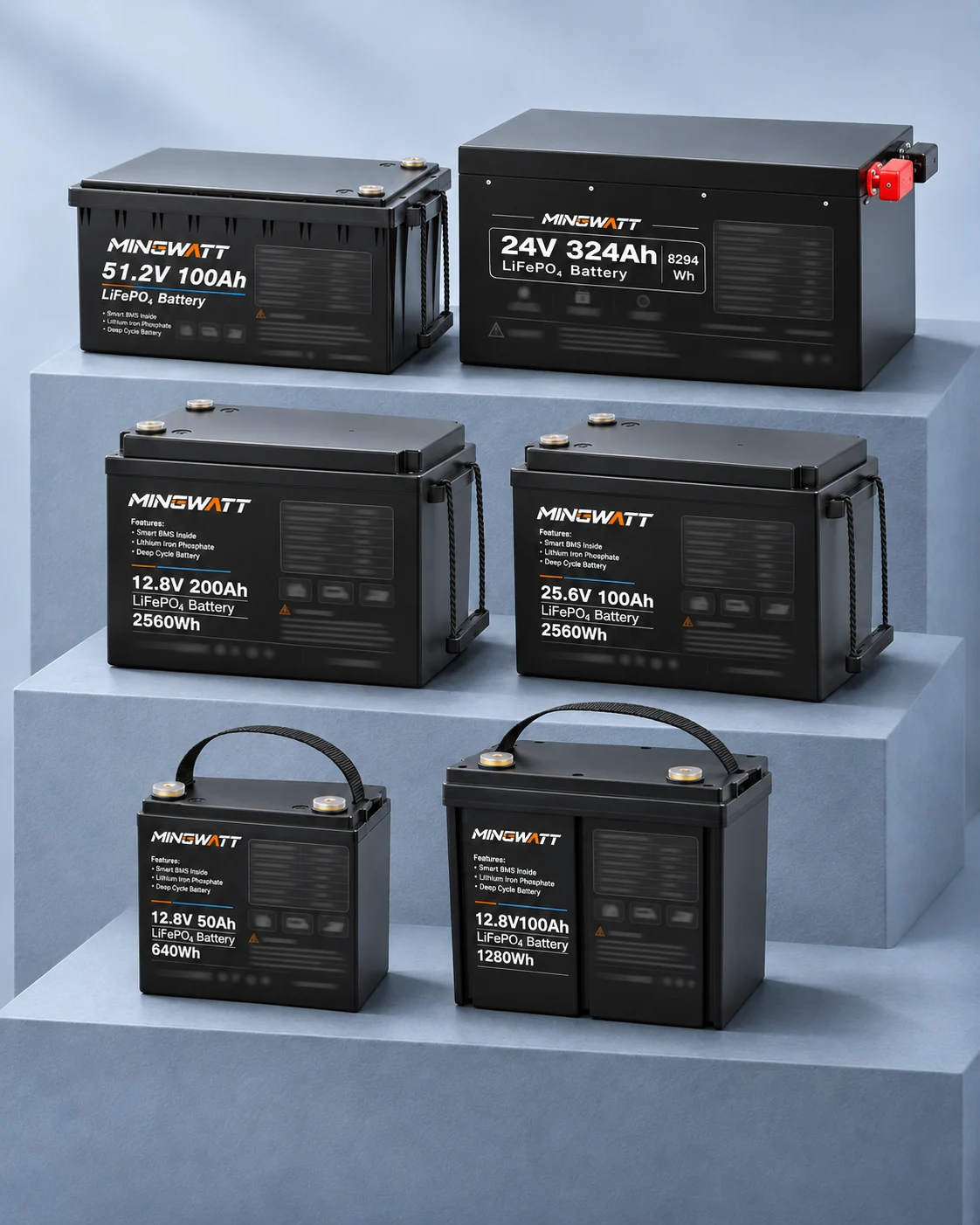
HC family · 12 V, 24 V and 48 V class
POWER YOUR NEXT ADVENTURE
01 / ON THE ROAD
Plan energy for lighting, appliances and everyday use while travelling. Review charging equipment and peak loads for your installation.

02 / OFF THE GRID
Match the battery to a compatible solar controller and inverter for small off-grid systems.

03 / EVERYDAY BACKUP
Choose the voltage and capacity around your actual load, operating schedule and available space.
SIX HC MODELS
Compare nominal voltage, capacity and installation dimensions, then review the configuration with MINGWATT.

HC SERIES · 1250
12.8V · 50Ah · 640Wh
197 × 165 × 155 mm · Max. continuous: 25A charge / 50A discharge
Explore this model ↗Opens our website form with this model selected. Add your charger and existing battery details for review.
HC SERIES · 12100
12.8V · 100Ah · 1,280Wh
261 × 162 × 217 mm · Max. continuous: 50A charge / 100A discharge
Explore this model ↗Opens our website form with this model selected. Add your charger and existing battery details for review.
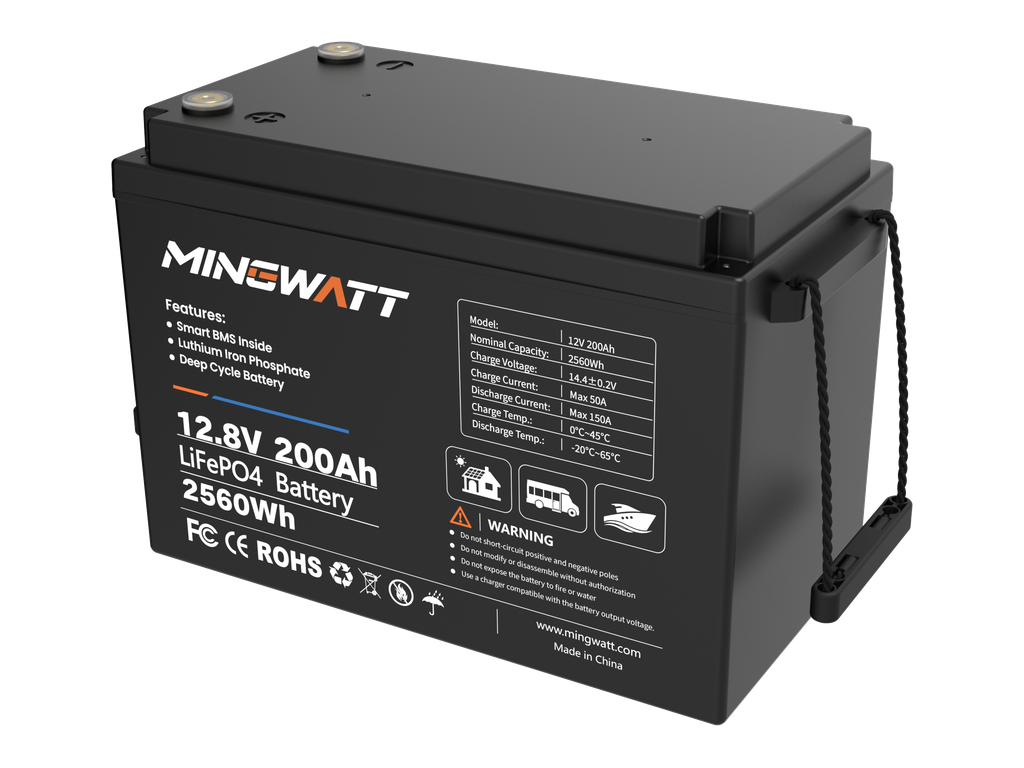
HC SERIES · 12200
12.8 V · 200 Ah · 2.56 kWh
Ask for the current dimensions, current limits and sample availability for your 12 V installation.
Explore this model ↗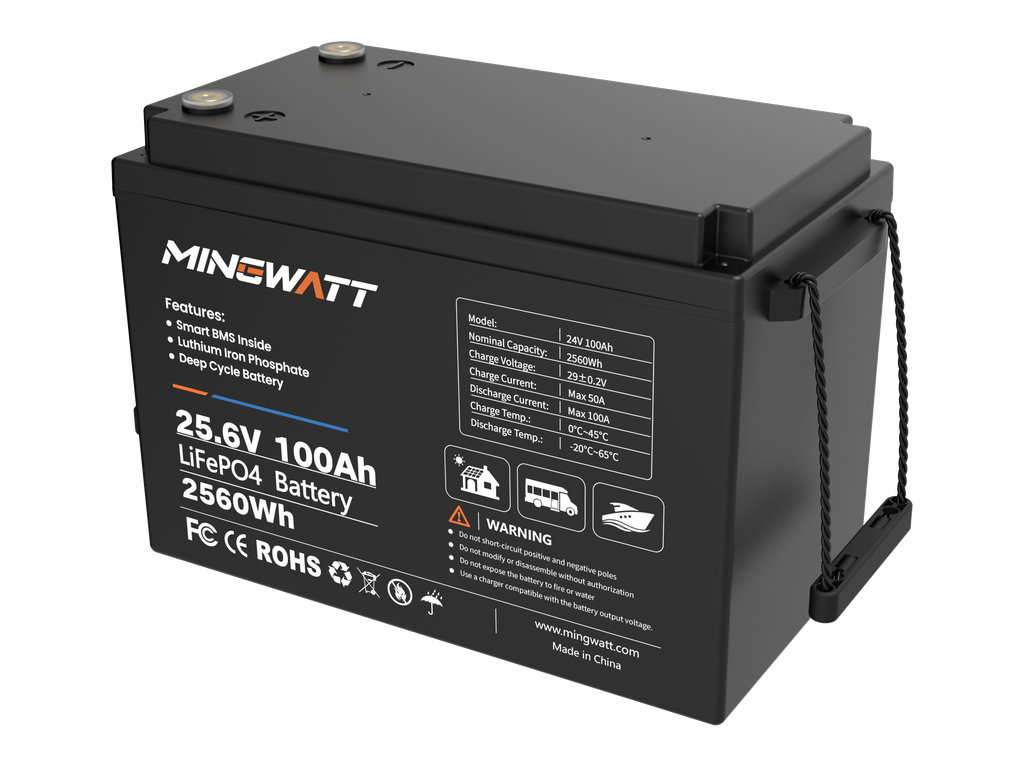
HC SERIES · 24100
25.6V · 100Ah · 2,560Wh
340 × 185 × 250 mm · Max. continuous: 50A charge / 100A discharge
Explore this model ↗Opens our website form with this model selected. Add your charger and existing battery details for review.

HC SERIES · 24324
25.6 V · 324 Ah · 8.29 kWh
For larger 24 V banks, confirm the mounting space, charger and operating current before selecting this model.
Explore this model ↗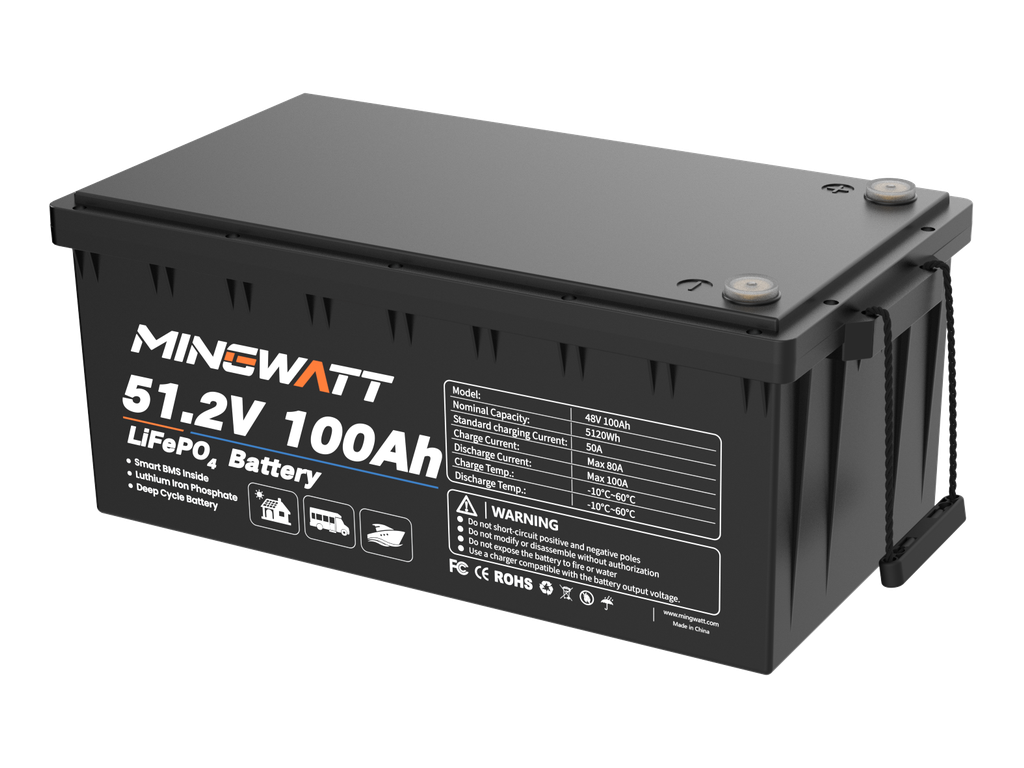
HC SERIES · 48100
51.2 V · 100 Ah · 5.12 kWh
Dimensions and operating current limits: request the current approved specification.
Explore this model ↗Opens our website form with this model selected. Add your charger and existing battery details for review.
LEAD-ACID TO LIFEPO4 SELECTION GUIDE
A similar battery size or a matching nominal voltage does not confirm a direct replacement. Review the charger, load, protection settings and physical installation for the exact HC model.
Compare 50, 100 and 200 Ah options for 12 V class systems. Match the charger, daily energy use and installation space to the selected model.
Review HC 1250 →The 100 Ah and 324 Ah models are both in the 24 V class. Review the full operating voltage range, charge current and available space for the model you choose.
Review HC 24100 →Request the current HC48V100Ah specification. Confirm nominal and operating voltage, controller or inverter requirements, and continuous and peak current before selection.
Review HC 48100 →Two batteries with the same voltage and capacity can have different cases, terminal layouts and mounting points. Use your existing installation as the starting point.
Only after its settings and charging behaviour have been checked against the selected battery's requirements. Send the charger label, model and available modes. A matching nominal voltage is not enough.
No. Compare nominal voltage, usable energy, actual load, conversion losses and operating limits. The condition and usage of the old battery also affect the comparison.
Do not assume approval for starting or traction duty from the capacity or the lead-acid replacement label. Share the application, controller and peak-current requirements for a model-specific review.
Send the existing battery model and bank arrangement, charger model, equipment or inverter model, continuous and starting loads, installation dimensions and operating temperature conditions. Include the destination and expected quantity for supply planning.
12.8 V · 100 Ah · 1,280 Wh nominal energy · 9.7 kg · 261 × 162 × 217 mm. Confirm the applicable product revision and electrical limits before ordering.
View the product and application images →Read the lead-acid to LiFePO4 replacement guide →
Request a replacement compatibility review →Sourcing for distribution? Discuss wholesale supply and sample validation →
Technical background: charger manufacturer guidance on charging and equalization. This is general background, not evidence of compatibility between MINGWATT batteries and that manufacturer's equipment.
HC 1250 and HC 12100 both have a nominal voltage of 12.8 V. Their nominal energy is 640 Wh and 1,280 Wh respectively. Compare the complete installation before choosing the larger capacity.
At the same nominal voltage, 100 Ah stores twice the nominal energy of 50 Ah. Delivered runtime still depends on usable capacity, load pattern, temperature and conversion losses.
Capacity in Ah is not a discharge-current rating. Review continuous current, startup peaks and BMS limits for the exact model and revision.
Compare dimensions, terminal location, polarity and mounting. HC12100 is 261 × 162 × 217 mm and 9.7 kg; confirm the supplied revision before designing its enclosure.
First identify whether the original batteries are in series or parallel. That changes the system voltage and capacity. Review the complete wiring, charging and protection arrangement before choosing a single replacement pack.
No. Confirm its actual charging voltage, current, termination behaviour and available modes against the selected battery documentation. A mode label alone does not identify the complete charging profile.
Provide photos of the existing battery label, charger label, terminals and installation space, plus equipment model, peak demand and daily use. Generate a brief below, then attach the photos in your email.
Request specifications and installation information for the selected HC model. No starting, traction or battery-bank configuration is approved by this guide alone.
FROM SAMPLE TO VOLUME SUPPLY
Share your target market, application and order plan. We will help review the battery configuration and delivery requirements.